
Shade for Central Florida patios, windows and storefronts
Awnings in Orlando, FL
Retractable, fixed and aluminum awnings sized for the Orlando sun and anchored for Florida wind.
- Free on-site estimates and measuring
- Written, itemized quote before any work
- Wall, fascia and anchoring checked on every install
Shade That Holds Up to Orlando Summers
Awnings in Orlando have a hard job. The city has a humid subtropical climate with summer highs in the low 90s, and the average stretch of 90-degree days runs from early April to mid-October. Humidity pushes the heat index past 110 degrees on the worst afternoons. A well-placed awning turns a patio, lanai or west-facing room you avoid in summer into one you use, and it keeps direct sun off sliding doors, furniture and floors.
Sun, then a storm by 4 p.m.
Orlando's rainy season runs from May into late October, and during the hot months strong afternoon thunderstorms arrive almost every day, often with heavy rain and lightning. The city averages about 51 inches of rain a year, most of it from June through September, with June the wettest month at about 8 inches. That pattern shapes every awning we design. Fabric needs enough pitch to shed water instead of pooling. Retractable awnings need to be pulled in when a storm's gust front arrives, which is why many homeowners here choose a motor with a wind or motion sensor. Fixed awnings and aluminum covers need a slope and gutter edge that move a downpour away from doors and walkways.
Hurricanes and the building code
Orlando sits about 42 miles inland from the Atlantic, so hurricanes usually weaken before they arrive, but Charley in 2004, Irma in 2017, Ian in 2022 and Milton in 2024 all caused damage here. The Atlantic hurricane season runs from June 1 to November 30, peaking around September 10. The Florida Building Code has a section on awnings and canopies with wind design requirements. In a 2010 declaratory statement (DCA10-DEC-182), the Florida Building Commission said a retractable awning is subject to the code's fabric structure design criteria in both the extended and the retracted position. In practice that means the brackets, fasteners and the wall behind them matter as much as the fabric. We check the mounting surface and anchoring before we quote, and we explain what to retract, remove or tie down before a named storm.
HOA approval and permits
Many Orlando-area neighborhoods have a homeowners association, and an awning is an exterior change most associations want to review. Under Florida Statute 720.3035, an association's architectural review power applies only where its governing documents state or reasonably imply it, it must apply its standards evenly, it may not require you to get a building permit before it reviews your plans, and if it denies a request it must say in writing which rule the plan breaks. We give you the drawings, fabric samples and color numbers your HOA usually asks for. Whether a building permit is needed depends on the type of awning and the jurisdiction: the City of Orlando inside city limits, Orange County in unincorporated areas, and city or county offices in Seminole, Osceola, Lake and Polk counties farther out. We confirm which office applies to your address.
Choosing the right type
- Retractable awnings extend over a patio when you want shade and roll back when you want sun or a storm is coming. Manual crank or motorized.
- Fixed fabric awnings stay in place over windows, doors and walkways, with a welded aluminum frame and replaceable fabric.
- Aluminum patio covers and awnings are solid or insulated metal roofs over patios, carports and entries, with no fabric to replace.
- Window and door awnings cut solar heat through glass and keep rain off entries.
- Commercial awnings shade storefronts and restaurant patios and can carry your name and address.
- Repair and fabric replacement gives a sound frame new fabric, arms or a new motor.
What drives the price
Angi's 2026 figures for Orlando put the average awning project at about $2,447, with a typical range of $1,464 to $3,554. Fixed awnings in the Orlando data run about $305 to $2,540, manual retractables about $815 to $4,570, and motorized retractables about $1,020 to $10,200. Width and projection, fabric grade, motor and sensors, the mounting surface and whether a permit is required move the number most. Your written estimate is the price.
What an estimate visit covers
- Measuring the width, height and projection the space needs
- Checking the wall, fascia or roof edge for a solid mounting point
- Noting sun direction and the hours you want shade
- Looking at drainage, gutters, doors and light fixtures in the awning's path
- Bringing fabric and frame color samples
- Talking through HOA and permit steps for your address
Our Awning Services
Six services cover the shade, rain and storefront needs of most Orlando homes and businesses, from a single window awning to a full patio cover.
Retractable Awnings
Manual or motorized awnings that roll out for shade and roll back before the afternoon storm.
Learn more →Fixed Awnings
Welded aluminum frames with fabric that stay up year-round over windows, doors, walkways and patios.
Learn more →Aluminum Patio Covers & Awnings
Solid and insulated aluminum roofs over patios, entries and carports, with no fabric to replace.
Learn more →Commercial Awnings
Storefront, restaurant and entrance awnings that shade customers and carry your name.
Learn more →Window & Door Awnings
Smaller awnings that block solar heat through glass and keep rain off entries.
Learn more →Awning Repair & Fabric Replacement
New fabric on a sound frame, plus repairs to arms, motors, hardware and storm damage.
Learn more →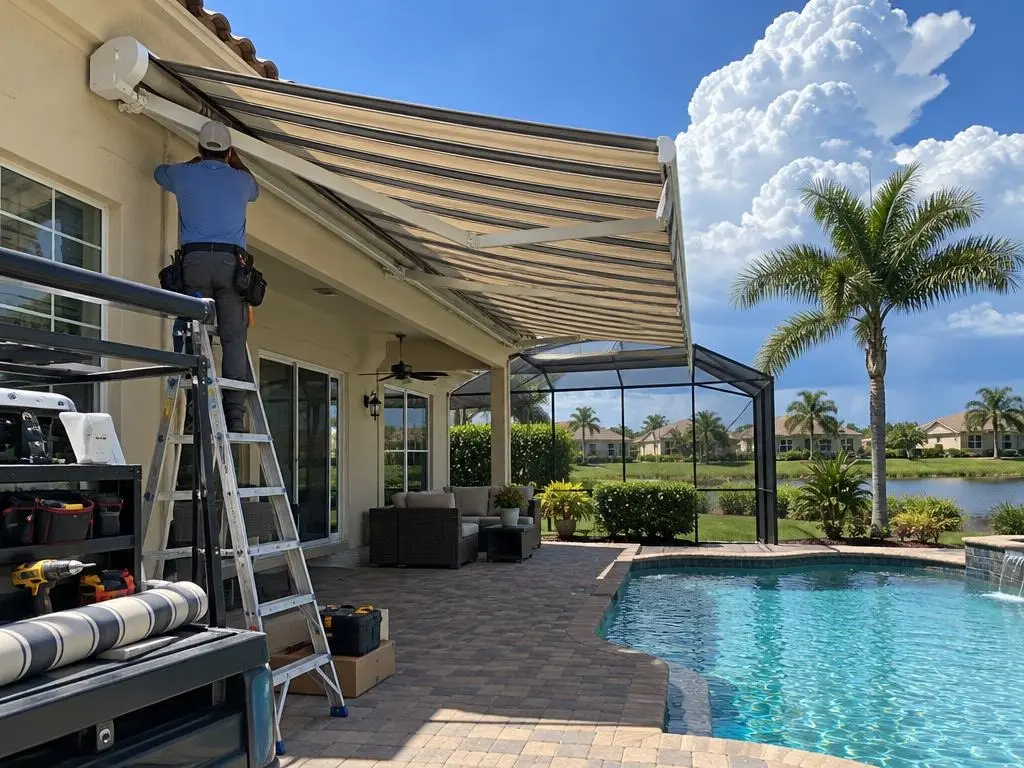
Where We Work
Orlando is home base. From there we work across Central Florida: Winter Park and Maitland close in; Windermere, Winter Garden and Ocoee to the west; Apopka to the northwest; Altamonte Springs, Casselberry, Longwood, Lake Mary, Oviedo, Winter Springs and Sanford in Seminole County; Kissimmee and Celebration in Osceola County; Clermont in Lake County; and Davenport in Polk County. The county line matters for awnings because it helps decide which building department reviews a permit, and many newer subdivisions in these towns have HOA design standards that set awning colors and styles. Each area page covers what applies there.
- Awnings in Orlando, FL
- Awnings in Winter Park, FL
- Awnings in Maitland, FL
- Awnings in Altamonte Springs, FL
- Awnings in Casselberry, FL
- Awnings in Longwood, FL
- Awnings in Kissimmee, FL
- Awnings in Celebration, FL
- Awnings in Davenport, FL
- Awnings in Windermere, FL
- Awnings in Winter Garden, FL
- Awnings in Ocoee, FL
- Awnings in Lake Mary, FL
- Awnings in Sanford, FL
- Awnings in Oviedo, FL
- Awnings in Winter Springs, FL
- Awnings in Clermont, FL
- Awnings in Apopka, FL
Why Homeowners Call Orlando Awnings Pros
Mounting checked first
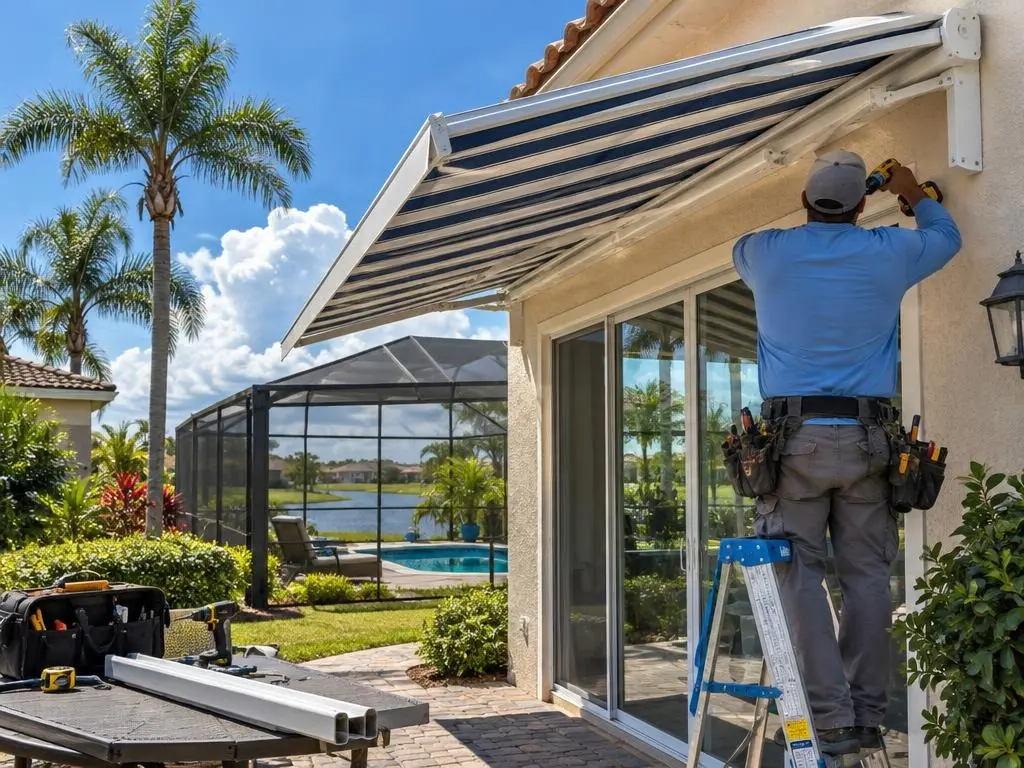
We look at the block, frame, stucco or fascia behind every bracket before we quote, because that is where wind loads end up.
Designed for afternoon storms
Pitch, drainage edges and sensor options are planned around Orlando's daily summer thunderstorms.
HOA paperwork ready
You get drawings, dimensions, fabric names and color numbers to submit to your association.
One written price
Your quote lists the awning, fabric, frame, motor, mounting and permit handling. Changes are agreed in writing first.
Common Questions
How much do awnings cost in Orlando?
Angi's 2026 Orlando figures put the average project at about $2,447, with most between $1,464 and $3,554. A small window awning can run a few hundred dollars, while a large motorized patio awning can reach $10,000 or more. We give a written price after measuring the space.
How much does a power awning cost?
A motorized retractable awning in Angi's Orlando data runs about $1,020 to $10,200, against about $815 to $4,570 for a manual one. Width and projection drive most of the difference, followed by the motor, wind or motion sensor, and whether a hood or cassette protects the rolled fabric.
What are the best awning brands?
There is no single answer, so we compare the parts that matter: the fabric, the frame and arms, and the motor. Solution-dyed acrylic fabrics hold color well in strong sun; Sunbrella, for example, offers a 10-year limited warranty on its shade fabrics. For frames, look at arm strength, powder-coat finish and stainless or coated hardware. We list each option and its manufacturer warranty on your quote.
Do I need a permit for an awning in Orlando?
Often, yes, especially for awnings and covers attached to the house, but it depends on the type, size and where you are. Inside city limits the City of Orlando's building department decides; in unincorporated areas it is Orange County. We check for your address and handle the application when one is required.
Do I need HOA approval for an awning?
If your governing documents give the association architectural review power, usually yes. Florida Statute 720.3035 says the association must apply its rules evenly, cannot require a building permit before it reviews your request, and must explain any denial in writing. We supply the drawings, fabric samples and color numbers it typically asks for.
Should I retract my awning during afternoon storms?
Yes. Retractable awnings are made for shade, not for gusty thunderstorms or hurricanes, so roll them in when a storm approaches. A wind or motion sensor can retract a motorized awning automatically if no one is home. Before a hurricane, retract it and follow the manufacturer's securing instructions.
Will an awning lower my cooling costs?
Shading glass on the south and west sides keeps direct sun from heating the room behind it, which can reduce how hard your air conditioner works in the afternoon. How much depends on the window size, orientation and existing shade. We position the awning to cover the glass during the hottest hours you identified.
Get an Awnings Estimate
Free on-site estimates in Orlando and across Central Florida.